A Winter Games Defined by Records and Nordic Supremacy
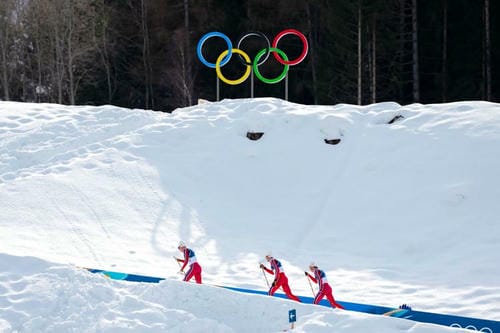
A Historic Winter in Milan and Cortina
The 2026 Winter Olympics, staged across Milan and Cortina d’Ampezzo in Italy from February 6 to February 22, delivered the type of drama and spectacle that defines the Olympic tradition. Across more than two weeks of competition and over one hundred medal events, athletes from around the world competed in disciplines that tested endurance, precision, and courage. Yet among the many compelling narratives that emerged, one storyline rose above the rest: the historic achievements of Norwegian cross-country skiing superstar Johannes Høsflot Klæbo and the continuing dominance of Norway as a winter sports powerhouse.
The Milan–Cortina Games represented a modern Olympic spectacle rooted in history. Cortina had previously hosted the Winter Olympics in 1956, while Milan’s involvement marked a renewed partnership between alpine and urban venues. Together, the two regions created a sprawling stage for winter sport, blending classic alpine landscapes with cutting-edge venues. The Olympic program included 116 medal events across 16 sports, reflecting the continued expansion of winter competition formats and disciplines. Athletes from dozens of nations arrived in Italy with dreams of podium finishes, but only a few would leave with performances that reshaped the historical record of the Winter Games.
One of the defining aspects of the 2026 Olympics was the depth of competition across disciplines. Freestyle skiing, speed skating, biathlon, alpine skiing, and cross-country skiing each produced unforgettable moments. Meanwhile, hockey and figure skating drew global attention as always, highlighting the diversity of athletic skill required in winter sport. The Games also showcased the growing international reach of winter athletics, with emerging nations competing alongside traditional powerhouses.
Yet even amid this global field, the medal table quickly revealed familiar patterns. Norway surged ahead early in the Games, accumulating medals across multiple disciplines and maintaining the efficiency and consistency that have become hallmarks of its Olympic program. By the time the closing ceremony arrived, Norway had once again secured the top position in the medal standings, capturing 18 gold medals and a total of 41 medals overall. The United States finished second with 33 medals, including 12 golds, while other strong winter sport nations followed behind. Norway’s total not only led the Games but also reinforced the country’s reputation as the most successful nation in Winter Olympic history.
While the Norwegian team’s collective success was remarkable, one athlete embodied the nation’s dominance more than any other. Johannes Høsflot Klæbo entered the Games already considered one of the greatest cross-country skiers of his generation. By the time the Olympic flame was extinguished in Verona, he had elevated his legacy into something approaching myth.
Johannes Høsflot Klæbo and the Six-Gold Masterpiece
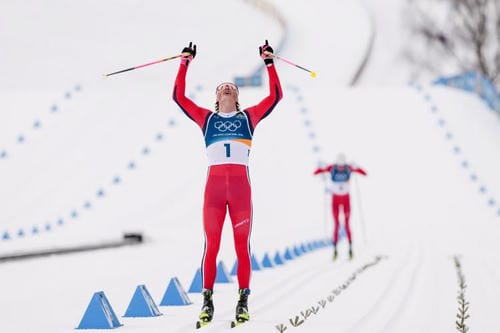
Olympic history is filled with extraordinary performances, but few have matched the perfection achieved by Johannes Høsflot Klæbo in Milan and Cortina. Competing in cross-country skiing, a discipline widely regarded as one of the most physically demanding in the Olympic program, Klæbo achieved an unprecedented feat: six gold medals in a single Winter Olympics.
Winning one Olympic gold is the dream of most athletes. Winning multiple golds requires extraordinary endurance and tactical mastery across different events. Klæbo managed to sweep every cross-country event in which he competed, an achievement rarely seen in Olympic competition. His victories spanned a range of race formats, demonstrating not only physical stamina but also remarkable versatility and racing intelligence.
The crowning moment of his Olympic campaign came in the grueling 50-kilometer classic race, one of the most iconic endurance events in winter sport. In that race, Klæbo pulled away from the field during the final stages to secure his sixth gold medal of the Games, surpassing the previous Winter Olympic record of five gold medals at a single Games set by American speed skater Eric Heiden in 1980.
Observers described the performance as one of the greatest individual displays in Olympic history. Cross-country skiing demands a combination of cardiovascular endurance, technical efficiency, and tactical awareness. The sport also requires athletes to recover rapidly between races held on different days, often under harsh weather conditions. Klæbo’s ability to maintain peak performance across multiple races suggested not only exceptional fitness but also meticulous preparation and strategic planning.
The Norwegian skier’s success also carried broader historical implications. By the end of the Games, his career Olympic gold medal tally had reached double digits, placing him among the most decorated winter athletes ever. For many fans and commentators, the Milan–Cortina Olympics confirmed what had long been suspected: Klæbo had become the defining cross-country skier of his era.
What made his achievement particularly remarkable was the level of competition he faced. Cross-country skiing remains one of the most competitive disciplines in winter sport, with strong challengers from countries such as Finland, Sweden, Russia, and Italy. Yet throughout the Games, Klæbo consistently demonstrated superior tactical awareness. Whether sprinting toward the finish line or pacing himself in long-distance events, he appeared to control races rather than simply react to them.
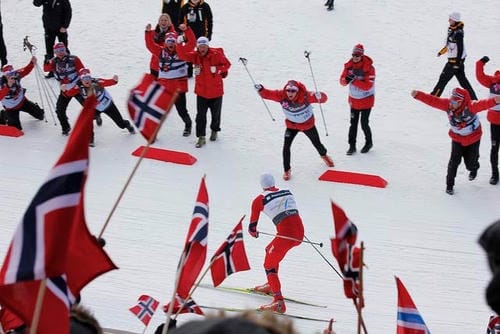
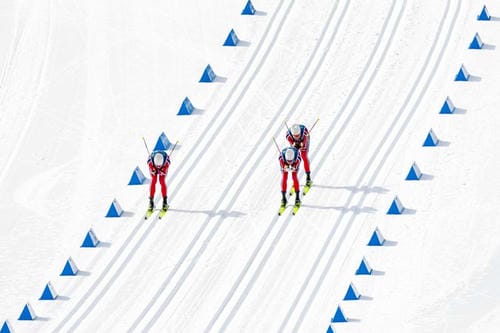
The visual images of his victories quickly circulated across global media. In several races he crossed the finish line with a decisive gap over his rivals, while in others he unleashed explosive final sprints that left competitors unable to respond. Even moments of exhaustion became part of the narrative: after the final 50-kilometer race, Klæbo collapsed from fatigue at the finish line, an image that symbolized both the extreme demands of the sport and the magnitude of his accomplishment.
Norway’s Enduring Formula for Winter Sports Dominance
Klæbo’s six gold medals represented the pinnacle of Norwegian success in Milan and Cortina, but they were far from the only reason Norway topped the medal table. The country’s dominance across winter sports has been building for decades, and the 2026 Olympics offered another clear demonstration of a system that continues to outperform larger and wealthier nations.
Norway’s population of roughly 5.7 million people might suggest a modest sporting presence compared with countries such as the United States, Germany, or China. Yet in winter sport, Norway consistently punches far above its demographic weight. The final medal count from the 2026 Winter Olympics illustrated this phenomenon clearly: Norway finished with 41 medals, including 18 golds, comfortably ahead of every other nation in the standings.
Several structural factors help explain this sustained success. First is geography. Norway’s climate and mountainous terrain create ideal natural conditions for winter sport, and many children grow up skiing or skating as part of everyday life. Cross-country skiing, in particular, is deeply embedded in Norwegian culture. Unlike in many countries where winter sports remain niche activities, skiing in Norway is both a recreational pastime and a national tradition.
Second is the country’s long-term investment in grassroots development. Norwegian sports organizations emphasize participation and skill development from an early age, encouraging young athletes to explore multiple sports before specializing later in their careers. This developmental philosophy prioritizes athletic longevity and reduces the risk of burnout. The result is a steady pipeline of world-class competitors capable of sustaining elite performance across multiple Olympic cycles.
Another factor is Norway’s emphasis on scientific training and innovation. Modern winter sport requires careful attention to equipment technology, snow conditions, waxing techniques, and physiological conditioning. Norwegian teams often lead the world in applying sports science to training and competition strategies. This combination of tradition and innovation has allowed the country to maintain its competitive advantage even as other nations invest heavily in winter sport programs.
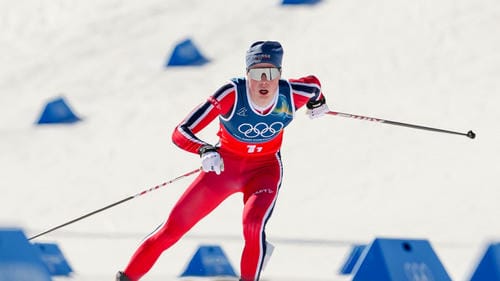
The 2026 Winter Olympics demonstrated how this system continues to produce results across disciplines. Norwegian athletes won medals in biathlon, cross-country skiing, alpine skiing, and other winter sports, highlighting the breadth of the country’s competitive depth. While Klæbo captured headlines, his teammates contributed significantly to the nation’s medal total, reinforcing the idea that Norway’s success is built not only on individual stars but also on a comprehensive national sports culture.
This dominance has also reshaped expectations in Winter Olympic competition. For many observers, Norway’s presence at the top of the medal table has become almost routine. The country has led the medal standings in several recent Winter Games, establishing a streak of success that rivals the greatest Olympic dynasties in history.
At Milan and Cortina, that legacy continued. Klæbo’s six gold medals symbolized the extraordinary heights that individual athletes can reach within Norway’s system, while the broader medal tally reflected the collective strength of a nation that has mastered the art of winter sport.
About the Author:
Blake Halvorsen is a sports journalist and winter sports analyst who has spent more than a decade covering international skiing and Olympic competition. After earning a master’s degree in sports journalism from the University of Oslo, he began reporting on Nordic skiing circuits across Europe before joining several international sports publications as a Winter Olympics correspondent. His work has appeared in major sports magazines and Olympic coverage platforms, where he specializes in cross-country skiing, athlete performance analysis, and the cultural history of winter sports. Known for blending statistical insight with on-site reporting, Halvorsen frequently writes about the evolving competitive landscape of the Winter Games and the athletes who shape its most memorable moments.
References:
[1] Bruton, M. (2026). Here’s the final U.S. medal count at the 2026 Winter Olympics. Forbes.
[2] NBC Olympics. (2026). Norway leaves Milan Cortina Olympics with record medal count.
[3] Reuters. (2026). Cross-country: “King Klaebo” wins 50km classic to clinch record sixth Milano Cortina gold.
[4] TravelPirates. (2026). Milano Cortina 2026 final medal count and standings.
[5] International Olympic Committee. (2026). Milano Cortina 2026 official medal table.
Recommend for you:
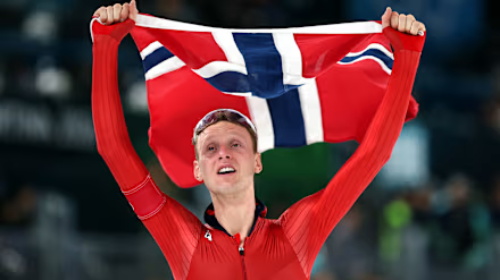
Sander Eitrem’s Historic Sub-Six-Minute 5000m
When Sander Eitrem sprinted across the ice at the 2025–26 ISU Speed Skating World Cup in Inzell, Germany, on January 24, 2026, he didn’t just win a race — he rewrote the history of long-distance speed skating.
Caitlin Clark Shines as USA Women’s Team Flexes Strength in Preseason Friendlies
Caitlin Clark once again proved why she is considered one of the brightest talents in women’s basketball during the USA Women’s National Team’s recent friendly series.
Record-Breaking Momentum Shapes the Early 2026 Athletics Season
The early months of the 2026 athletics calendar have already delivered a series of performances that hint at a remarkable year ahead for track and field.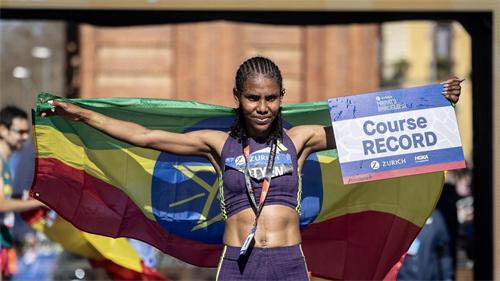
Mesfin Abebe Sets New Marathon Record in Barcelona
In a performance that will be remembered for years, Ethiopian long-distance runner Mesfin Abebe shattered expectations at the 2026 Barcelona Marathon, setting a new world record in the process.