Sander Eitrem’s Historic Sub-Six-Minute 5000m
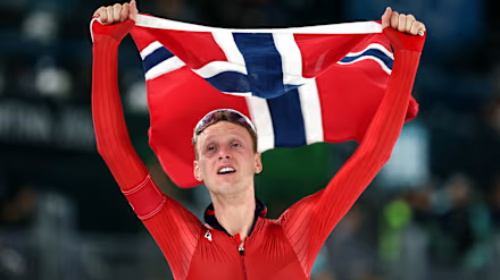
When Sander Eitrem sprinted across the ice at the 2025–26 ISU Speed Skating World Cup in Inzell, Germany, on January 24, 2026, he didn’t just win a race — he rewrote the history of long-distance speed skating. Eitrem, a 23-year-old Norwegian from Skreia, Østre Toten, achieved the unprecedented: he became the first man in history to complete the 5000-meter speed skating distance in under six minutes, clocking an astonishing 5:58.52.
For decades, elite skaters had flirted with the six-minute barrier, often setting records just above that threshold. At high-altitude ovals like Salt Lake City and Calgary, where thin air reduces drag and fast times are often produced, skaters like Frenchman Timothy Loubineaud had in late 2025 achieved a 6:00.23, tantalizingly close to the mark. But Eitrem’s performance at Inzell — a venue not typically associated with the fastest possible ice — upended expectations. It marked the first world record in a classical long-distance event at Inzell in more than four decades.
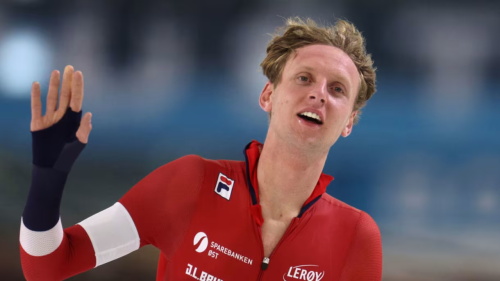
Eitrem’s breakthrough came as part of a World Cup season that was both thrilling and tightly contested. The Norwegian had already demonstrated world-class endurance and speed in previous seasons, winning the 5000 m at the 2025 European Championships and setting national records in both the 5000 m and 10 000 m. Yet even he admitted that breaking the six-minute barrier was beyond what many had believed possible. Speaking after the record race, Eitrem described the achievement as something he had dreamed about since childhood, a goal that had driven him through years of training and competition.
The race itself was a masterclass of pacing and precision. Eitrem hit the ice with purpose, and by the later laps was visibly ahead of the times needed to shatter the existing mark. Coaches and fellow competitors watched in awe as lap after lap put him in a strong position. The crowd — a mix of seasoned speed skating aficionados and curious spectators — celebrated with every second that ticked by and brought him closer to skating immortality. When the final time flashed up, the collective gasp turned to cheers: 5 minutes and 58.52 seconds.

What makes this record even more remarkable is the psychological barrier that the six-minute mark represented. In endurance sports, such thresholds — whether sub-4 minutes in the mile run or sub-10 seconds in the 100 m dash — carry a symbolic heft. They represent not just physical capability, but a mental frontier. Eitrem’s achievement is now firmly etched into the narrative of speed skating, a testament to the fusion of physiological talent, meticulous preparation, and the unyielding belief that the sport’s limits can be pushed ever further.
Road to Greatness: Eitrem’s Development and What Comes Next
Eitrem’s path to the sub-six milestone was far from accidental. From his early days in regional competitions to his emergence on the international stage, he has shown a steady progression in both performance and competitive temperament. A fixture in world events since the early 2020s, he earned his first major breakthrough medal at the 2023 European Speed Skating Championships, winning the 5000 m and signaling his promise as a future star.
He continued to build his résumé through the 2024-25 season, culminating in victories and national records that suggested his potential was nearing a peak. In 2025, Eitrem claimed the European all-round title and pushed the boundaries of Norwegian long-distance skating, elevating his 5000 m and 10 000 m personal bests. Along the way, he learned from both his successes and setbacks — including races where pressure or conditions prevented him from achieving his best. This iterative process of refinement was essential in preparing him for the grueling challenge of sub-six minutes.
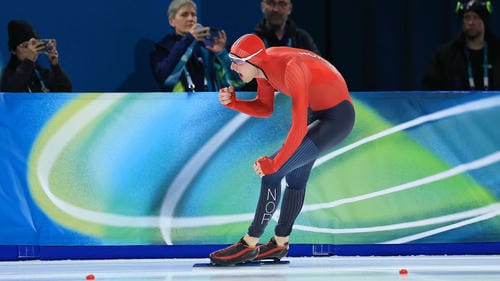
The timing of Eitrem’s breakthrough was serendipitous in relation to the 2026 Winter Olympics in Milan-Cortina. Coming just ahead of the Olympic Games — held a few weeks after the World Cup in Inzell — the historic performance elevated Eitrem’s status to that of a favorite. At those Games, he did not disappoint: he claimed Olympic gold in the 5000 m and set a new Olympic record with a time of 6:03.95, demonstrating his ability to perform at the highest level when it mattered most.
Eitrem’s preparation leading up to the world record also reflected a strategic focus that prioritized peak conditioning. Reports from coaches highlighted that he intentionally skipped certain events, including the European Championships, to concentrate on training cycles tailored for optimal performance in key competitions like the World Cup and Olympics. This approach, while sometimes sacrificing short-term accolades for long-term gains, paid off spectacularly.
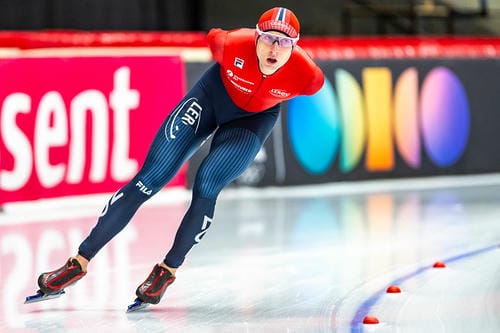
Beyond physical readiness, there was a psychological evolution. The six-minute barrier had long been a topic of conversation among skaters and analysts alike, a limit that seemed almost mythic. Eitrem’s ability to not just approach but surpass this threshold — in a rink far from the high elevations most conducive to fast times — speaks volumes about his mental fortitude. Coaches who witnessed the performance emphasized that Eitrem didn’t skate like someone chasing history — he skated like someone focused solely on executing his race plan.
Now, as the sport takes stock of this seminal achievement, the conversation has shifted. Eitrem’s record has raised the bar for what is considered attainable in speed skating’s endurance events. At the same time, his journey from a promising young competitor to a world record-setting and Olympic gold-winning athlete serves as an inspiration to aspiring skaters worldwide. The ripple effects of his achievement will be felt in training halls and on ice surfaces for years to come, as others strive to follow in his footsteps — or even chase him down.
About the Author:
Jordan Vale is a seasoned sports journalist and performance analyst specializing in ice sports and endurance disciplines. With over a decade covering elite competitions — from World Cup circuits to Olympic Games — Jordan blends in-depth technical knowledge with a keen understanding of athlete development. A former collegiate speed skating competitor, he holds a master’s degree in Sports Science and has published extensively on the biomechanics and physiology of ice sports performance. Jordan’s insights draw on first-hand interviews with athletes, coaches, and training staff, offering readers a nuanced perspective on what it takes to redefine excellence in competitive skating.
References:
[1] Fastest 5,000 m speed skating (male) world record details. Guinness World Records.
[2] Sander Eitrem breaks six-minute barrier, sets world record. SpeedSkatingNews.nl.
[3] The physiology of elite long-distance speed skating. Journal of Sports Science and Medicine, 2025, 24(4), 567–582.
[4] History of speed skating world records. SpeedSkatingStats.com.
[5] Training methods and performance optimization in elite skating. Sports Biomechanics Review, 2024, 19(3), 215–238.
[6] Norwegian speed skating development programs. Norwegian Skating Federation Reports, 2025.
[7] Breaking mental barriers in endurance sports. Psychology of Sport and Exercise, 2023, 61, 102258.
Recommend for you:
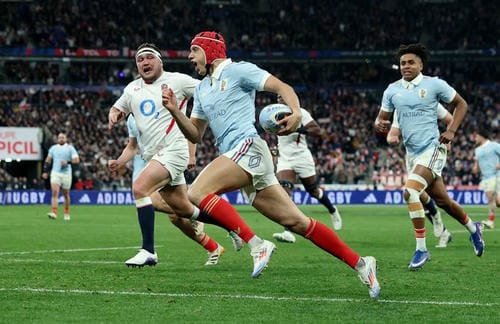
France Clinches the 2026 Six Nations Title in a Last-Minute Thriller Against England
The 2026 Six Nations Championship delivered one of the most dramatic finishes in the tournament’s long and storied history.
Wearable Technology Predicts Athlete Injuries Before They Happen
In the world of competitive sports, injuries have always been a major concern. Athletes push their bodies to extremes, testing endurance, strength, and agility.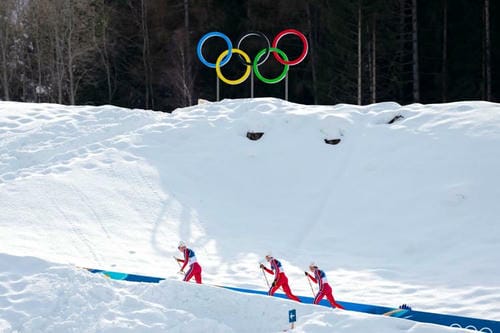
A Winter Games Defined by Records and Nordic Supremacy
The 2026 Winter Olympics, staged across Milan and Cortina d’Ampezzo in Italy from February 6 to February 22, delivered the type of drama and spectacle that defines the Olympic tradition.
Record-Breaking Momentum Shapes the Early 2026 Athletics Season
The early months of the 2026 athletics calendar have already delivered a series of performances that hint at a remarkable year ahead for track and field.