Digital Tools Elevate Judging Accuracy in Dance and Gymnastics
The Technology Redefining Movement Analysis
At its core, motion capture involves recording the movement of the human body using cameras, sensors, or markerless systems to generate precise digital representations of motion in three-dimensional space . While traditional judging in dance and gymnastics has relied heavily on human observation, interpretation, and subjective scoring, motion capture introduces a fundamentally different paradigm: quantifiable, data-driven evaluation.
The evolution of motion capture systems has been particularly significant in the past decade. Early systems required performers to wear reflective markers attached to their bodies, which were tracked by multiple cameras to reconstruct movement. Modern systems, however, increasingly rely on markerless technology, using computer vision and artificial intelligence to analyze body positions directly from video feeds. This shift dramatically reduces setup complexity and allows motion analysis to occur in real-world competition environments without interfering with athletes’ performances .
In dance, motion capture provides a granular understanding of movement that extends far beyond what the human eye can reliably perceive in real time. Subtle variations in timing, joint angles, velocity, and spatial positioning can be captured and quantified. For instance, wearable sensor systems and vision-based tracking can identify the dynamic progression of a dancer’s movement, enabling recognition of stylistic nuances and technical precision . This level of detail is particularly valuable in genres where interpretation and fluidity are central, yet scoring still demands a degree of technical rigor.
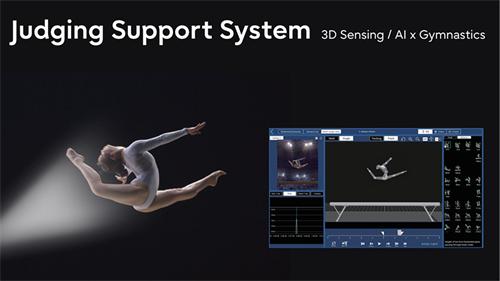
Gymnastics, by contrast, has long faced challenges related to judging accuracy due to the extreme speed and complexity of routines. A single routine may include multiple high-difficulty elements executed within seconds, each requiring precise evaluation of body alignment, rotation, and landing stability. Motion capture systems address this challenge by converting performances into analyzable datasets, where every joint angle and trajectory can be measured against standardized models. Algorithms can track spatiotemporal movement patterns, comparing them with predefined templates to determine execution quality .
What makes motion capture particularly impactful is its ability to operate in four dimensions—three spatial dimensions plus time. This temporal component allows analysts to study not just static positions but the continuity and rhythm of movement, which are critical in both dance choreography and gymnastic routines. Systems can detect inconsistencies in timing, asymmetries in motion, or deviations from optimal technique that might otherwise go unnoticed during live judging.
The integration of artificial intelligence further enhances the analytical power of motion capture. Machine learning models can be trained on large datasets of elite performances, enabling systems to recognize patterns associated with high-level execution. Over time, these systems can refine their evaluations, becoming increasingly accurate and consistent. In effect, motion capture transforms performance into a dataset that can be continuously analyzed, compared, and improved upon.
From Subjective Judging to Data-Driven Scoring
One of the most profound impacts of motion capture technology lies in its potential to reshape how competitions are judged. Historically, both dance and gymnastics have grappled with issues of subjectivity, bias, and inconsistency in scoring. Even with standardized judging criteria, human judges can interpret performances differently based on perspective, experience, or even unconscious bias.
Motion capture introduces a layer of objectivity by providing measurable metrics that can support or, in some cases, challenge human judgment. In gymnastics, this shift is already underway. The International Gymnastics Federation has collaborated with technology companies to develop AI-powered judging support systems capable of analyzing performances in real time. These systems can identify specific elements, measure joint angles, and evaluate execution with high precision, achieving accuracy rates reported to be around 95% .
During major competitions such as world championships, camera-based systems have been deployed to assist judges by providing detailed breakdowns of each movement. These systems analyze posture and positioning to ensure that elements are performed according to strict technical standards, helping to reduce errors and improve fairness . Rather than replacing judges, the technology acts as a decision-support tool, offering data that can validate or question subjective assessments.
Dance competitions, while traditionally more expressive and less rigidly codified than gymnastics, are also beginning to explore the use of motion capture in judging. Studies have shown that motion capture visualizations—such as stick-figure or humanoid representations—can improve the reliability of judging by providing standardized views of performance . By stripping away visual distractions like costumes or facial expressions, these representations allow judges to focus purely on movement quality and technique.
The implications of this shift are significant. In a data-driven judging environment, scoring can be broken down into quantifiable components such as precision, consistency, and adherence to technique. This mirrors developments in other judged sports, such as figure skating, where scoring systems have evolved to provide more detailed and transparent evaluations of performance elements . Motion capture has the potential to push this evolution even further, offering unprecedented granularity in performance analysis.
However, the transition to data-driven scoring is not without challenges. One key concern is the balance between objectivity and artistic expression. In dance, particularly, performance quality encompasses emotional resonance, creativity, and interpretive nuance—elements that are difficult to quantify. While motion capture can measure the mechanics of movement, it cannot fully capture the subjective experience of watching a performance.
There is also the question of technological reliability and accessibility. High-precision motion capture systems require sophisticated hardware and software, which may not be equally available across all competitions or regions. Ensuring consistency in how the technology is implemented will be critical to maintaining fairness.
Despite these challenges, the trajectory is clear: motion capture is becoming an integral part of the judging ecosystem. By providing a consistent, objective baseline, it enhances the credibility of competition results and reduces the likelihood of विवाद or controversy. At the same time, it offers athletes and coaches valuable feedback, enabling them to refine their techniques with unprecedented precision.
Training, Performance, and the Future of Competitive Movement
Beyond judging, motion capture is fundamentally changing how athletes and performers train. In both dance and gymnastics, the ability to visualize and analyze movement in real time provides a powerful tool for skill development. Athletes can receive immediate feedback on their performance, allowing them to correct errors and optimize techniques more efficiently than ever before.
Interactive systems that use motion capture and pose estimation can compare an athlete’s movements against ideal models, highlighting discrepancies in joint angles, timing, or coordination. These systems can even gamify training, using visual feedback or augmented environments to encourage improvement. For example, experimental platforms have demonstrated significant reductions in movement errors through repeated, data-driven practice sessions, underscoring the effectiveness of real-time feedback mechanisms.
In dance, motion capture also opens new possibilities for choreography and performance design. Choreographers can analyze movement patterns quantitatively, exploring how different sequences affect rhythm, balance, and spatial dynamics. This data-driven approach can lead to more innovative and technically refined performances, blending artistic creativity with scientific analysis.
Gymnastics training, meanwhile, benefits from the ability to dissect complex routines into measurable components. Coaches can analyze each phase of a movement—takeoff, rotation, and landing—identifying inefficiencies or inconsistencies. This level of analysis not only improves performance but also enhances safety by reducing the risk of injury through better technique and alignment.
The broader implications extend to audience engagement as well. Motion capture data can be integrated into broadcasts, providing viewers with real-time insights into performance metrics such as jump height, rotation speed, or balance stability. This not only enhances understanding but also deepens appreciation for the technical complexity of the sport.
Looking ahead, the convergence of motion capture, artificial intelligence, and wearable technology suggests a future where performance analysis is fully integrated into every aspect of competition. Athletes may train with personalized AI coaches, competitions may feature hybrid judging systems combining human expertise with machine precision, and audiences may experience performances through augmented or virtual reality environments enriched by real-time data.
As motion capture continues to evolve, its role in dance and gymnastics will likely expand beyond measurement and evaluation to become a central component of how these disciplines are practiced, judged, and experienced. The technology does not merely observe movement—it redefines it, translating the ephemeral art of human motion into a language of data that can be analyzed, optimized, and shared.
About the Author:
Elliot Vance is a sports technology writer and former biomechanics analyst who has spent over a decade working at the intersection of performance science and digital innovation. With a master’s degree in kinesiology and experience consulting for elite training centers and motion analysis labs, he specializes in emerging technologies such as motion capture, AI-assisted coaching, and performance analytics. His work has been featured in leading sports science publications, where he explores how data-driven tools are reshaping the future of athletic competition and artistic performance.
References:
[1] Jiang, X., Ibrahim, Z., Jiang, J., & Liu, G. (2026). Motion capture as an immersive learning technology: A systematic review. Multimodal Technologies and Interaction.
[2] Fujitsu. (2024). Human motion analytics: AI-based skeletal tracking and analysis.
[3] ScienceDirect. (2024). Application of motion capture technology in dance body motion recognition.
[4] ScienceDirect. (2014). Automatic recognition and scoring of rhythmic gymnastic movements.
[5] Gigazine. (2024). AI-based judging systems in gymnastics competitions.
[6] Sato, N., & Hopper, L. S. (2021). Reliability of judging in hip-hop dance using motion capture visualization.
Recommend for you:
How the 2026 Formula One Calendar Was Redefined by Geopolitical Turmoil?
The 2026 Formula One World Championship has experienced one of the most dramatic schedule upheavals in recent memory following the cancellation of two cornerstone races in the Middle East.
Triumph on Ice and Snow: Highlights from the 2026 Winter Paralympics
The 2026 Winter Paralympics in Milan and Cortina d’Ampezzo offered an unforgettable display of skill, resilience, and determination, cementing the Games’ status as a premier global sporting event.
Digital Tools Elevate Judging Accuracy in Dance and Gymnastics
Motion capture, often abbreviated as MoCap, has transitioned from a niche tool in film and animation into a transformative force in competitive sports like dance and gymnastics.
Drone Racing Breaks Attendance Records Across European Cities
In the past decade, drone racing has evolved from a niche hobby into one of the most exhilarating spectator sports in the world.