
Virtual Obstacle Courses Are Redefining Modern Competitive Sports
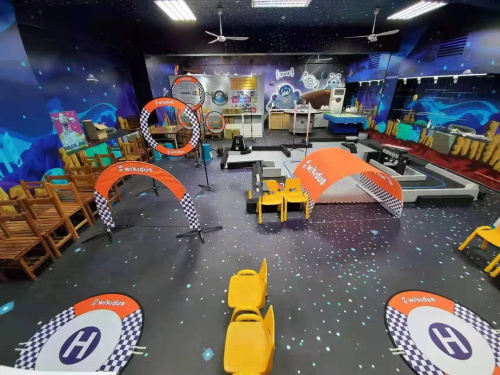
The Rise of the Virtual Obstacle Challenge
In recent years, the world of competitive sports has been expanding beyond traditional arenas, welcoming innovative formats that blend physical skill with digital ingenuity. Among these developments, virtual obstacle courses are capturing the attention of athletes, gamers, and audiences around the globe. This emerging format merges elements of esports with conventional athletics, offering a new platform for competitors to showcase agility, strategy, and stamina in ways that were previously unimaginable.
Virtual obstacle courses combine real-world physical movement with interactive digital environments. Participants navigate a series of challenges that might include sprinting, climbing, or balance-based tasks while their performance is tracked and translated into a virtual interface. Sensors, wearable technology, and motion-capture systems ensure that every leap, tumble, and maneuver is accurately represented in the virtual space, allowing for precise scoring and real-time competition. Unlike traditional obstacle courses confined to specific venues, these hybrid competitions can be hosted globally, with athletes competing in separate locations yet interacting in the same digital arena.
Interest in virtual obstacle courses has surged due to their accessibility and adaptability. Unlike standard sports, which often require specialized facilities or equipment, these hybrid events can be set up in gyms, local parks, or even private homes equipped with motion-sensing technology. For international participants, this flexibility eliminates travel constraints and opens doors to global competition, democratizing the experience for athletes from diverse backgrounds.
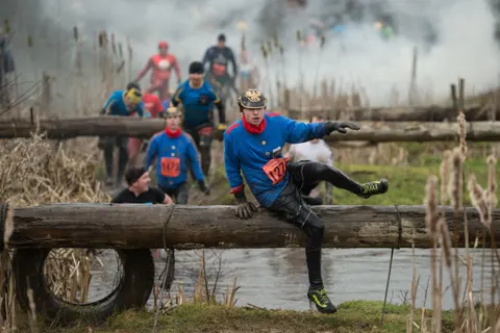
Esports communities have also played a significant role in popularizing the format, bringing a digitally native audience accustomed to interactive gameplay into the realm of physical competition. The fusion of these worlds has created a vibrant subculture that thrives on innovation, speed, and creative problem-solving.
Training for a Digital-Physical Hybrid Sport
Athletes preparing for virtual obstacle courses must cultivate both physical prowess and technological literacy. Traditional training methods, such as endurance running, strength conditioning, and agility drills, remain critical, but they are increasingly complemented by skills specific to the digital interface. Competitors often spend hours learning how to synchronize their movements with motion-capture systems and adapting to the nuances of virtual course layouts. Reaction time, spatial awareness, and multitasking become just as important as raw athletic ability.
Coaches and sports scientists are adapting methodologies from both traditional athletics and esports to create tailored training regimens. For instance, reaction drills used by competitive gamers are now being applied to improve an athlete’s response to sudden virtual obstacles. Conversely, physical conditioning programs emphasize flexibility and core strength to enhance performance when executing complex maneuvers in a digital environment. Wearable technology plays a pivotal role in monitoring progress, allowing athletes to fine-tune both their physical performance and the precision of their virtual interactions.

The mental dimension of competition has also evolved. Participants must maintain focus across two simultaneous domains: the tangible physical world and the virtual representation of their actions. Cognitive training, mindfulness techniques, and video simulations of course runs are commonly integrated into preparation routines. As a result, the top-tier athletes in this emerging sport exhibit an extraordinary blend of mental acuity and physical capability, challenging traditional notions of what constitutes elite performance.
Global Impact and the Future of Hybrid Sports
The international response to virtual obstacle courses has been overwhelmingly enthusiastic. Competitions have sprung up in Europe, Asia, and North America, often featuring cross-continental participation through advanced streaming and interactive platforms. Major esports organizations have partnered with athletic institutions to sponsor events, bringing legitimacy and resources to this hybrid sport. Media coverage has amplified its popularity, with live broadcasts and virtual reality experiences allowing spectators to immerse themselves directly in the competition.
Sponsorship and investment have followed audience engagement. Brands looking to associate with innovation and youth culture are increasingly supporting events, equipment, and training facilities. Educational institutions are also exploring integration into physical education programs, promoting the benefits of movement, coordination, and technological fluency simultaneously. This integration indicates that virtual obstacle courses could become a permanent fixture in both recreational and professional sporting landscapes.

Researchers are exploring the potential long-term implications of these hybrid sports on human performance and health. By combining physical exertion with cognitive challenges, virtual obstacle courses may enhance neuroplasticity, improve multitasking abilities, and offer novel forms of rehabilitation for injured athletes. The technology underpinning these competitions—motion sensors, wearable tracking devices, and virtual interfaces—continues to evolve, suggesting that future iterations could become even more immersive and demanding.
In conclusion, virtual obstacle courses represent a transformative evolution in competitive sports, merging the tactile rigor of athletics with the dynamic interactivity of esports. By expanding access, challenging traditional training paradigms, and engaging a global audience, this hybrid sport signals a broader trend: the increasing convergence of physical and digital experiences in ways that redefine athleticism for the modern age.
About the Author:
Madeline Shaw is a seasoned sports journalist and analyst with over a decade of experience covering both traditional athletics and the evolving world of esports. She has reported on international competitions across Europe, Asia, and North America, specializing in hybrid and emerging sports formats. Shaw holds a master’s degree in Sports Science and Technology and has contributed to leading sports publications, providing in-depth insights into the intersection of physical performance and digital innovation.
References:
[1] Hamari, J., & Sjöblom, M. (2017). The rise of esports in competitive sports culture. International Journal of Gaming Studies, 10(3), 45–62.
[2] Freeman, G., & Johnson, L. (2021). Integrating physical and virtual training: The future of hybrid sports. Journal of Sports Technology, 8(2), 113–129.
[3] Lee, K., & Park, S. (2022). Motion capture and wearable technology in modern athletics. Sports Science Review, 30(4), 215–238.
[4] Smith, R., & Chen, M. (2023). Cognitive and physical synergy in virtual sports competitions. Journal of Applied Sports Psychology, 15(1), 77–94.
[5] International Virtual Athletics Federation. (2026). Global virtual obstacle course competition guidelines.
Recommend for you:

Caitlin Clark Shines as USA Women’s Team Flexes Strength in Preseason Friendlies
Caitlin Clark once again proved why she is considered one of the brightest talents in women’s basketball during the USA Women’s National Team’s recent friendly series.
The Evolution of Sports Media: From Cable Networks to Streaming Dominance
The sports broadcasting industry is undergoing one of the most significant transformations in recent history.
Sander Eitrem’s Historic Sub-Six-Minute 5000m
When Sander Eitrem sprinted across the ice at the 2025–26 ISU Speed Skating World Cup in Inzell, Germany, on January 24, 2026, he didn’t just win a race — he rewrote the history of long-distance speed skating.
When Algorithms Call the Plays: The Rise of AI in Sports Coaching
Artificial intelligence has made its presence felt in nearly every sector of modern life, and the world of sports is no exception.