
Competitive Cheese Rolling Remains One of the Most Thrilling Traditional Sporting Spectacles
A Tradition That Defies Logic and Time
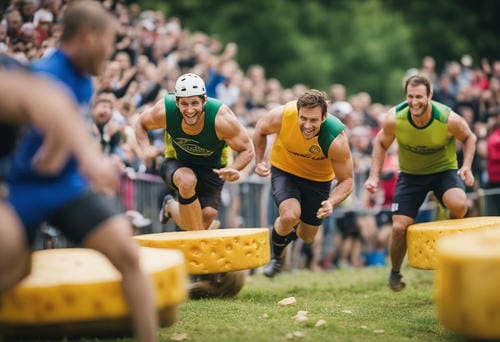
Every year, on a steep hillside in Gloucestershire, England, participants gather for an event that seems almost absurd at first glance: they chase a wheel of cheese down a dangerously sharp slope. Known widely as competitive cheese rolling, this centuries-old tradition continues to captivate both participants and spectators, blending cultural heritage with raw physical daring. Despite the risks, logistical challenges, and evolving safety concerns, the event has not only survived but thrived in the modern era, drawing international attention and a growing audience.
The origins of cheese rolling are somewhat ambiguous, with historians tracing its roots back several hundred years. Some accounts suggest it began as a pagan ritual celebrating the arrival of spring, while others propose it was a practical way for villagers to assert grazing rights on common land. Regardless of its beginnings, the event has evolved into a unique sporting phenomenon, retaining its rustic charm while adapting to contemporary expectations of spectacle and media coverage.
At its core, the premise is deceptively simple: a round of cheese—typically a Double Gloucester weighing around seven to nine pounds—is released from the top of a hill, and competitors race after it. The first person to cross the finish line at the bottom is declared the winner, though catching the cheese itself is nearly impossible due to its speed. The hill’s incline, often exceeding 45 degrees in certain sections, ensures that participants quickly lose control, tumbling and rolling in pursuit of the runaway prize.
What distinguishes cheese rolling from more conventional sports is its resistance to standardization. There are no professional leagues, no governing bodies imposing strict regulations, and no formal training regimens that guarantee success. Instead, the event thrives on spontaneity, local tradition, and the willingness of individuals to embrace risk. This lack of institutionalization contributes to its enduring appeal, offering a stark contrast to the highly commercialized nature of modern sports.
Spectators are drawn not only to the competition itself but also to the atmosphere surrounding it. The event typically coincides with local festivities, creating a carnival-like environment filled with music, food, and communal celebration. The unpredictability of each race adds to the excitement, as no two runs are ever the same. Participants often come from diverse backgrounds, including seasoned athletes, curious tourists, and thrill-seekers looking for an unforgettable experience.

Media coverage has played a significant role in amplifying the event’s popularity. Viral videos showcasing dramatic tumbles and triumphant finishes circulate widely on social platforms, introducing cheese rolling to audiences far beyond its local origins. This global exposure has transformed what was once a regional curiosity into an internationally recognized spectacle, attracting competitors from across the world.
The Psychology of Risk and Spectator Fascination
One of the most compelling aspects of competitive cheese rolling lies in its inherent danger. Injuries are not uncommon, ranging from minor bruises to more serious conditions such as fractures and concussions. Yet, rather than deterring participants, this element of risk appears to enhance the event’s allure. Understanding why requires an examination of both participant psychology and spectator behavior.
For competitors, the appeal often stems from a combination of adrenaline, challenge, and the desire for distinction. In an era where many sports are highly structured and performance outcomes are influenced by extensive training and resources, cheese rolling offers a more egalitarian form of competition. Success depends less on technical skill and more on courage, timing, and a degree of luck. This unpredictability levels the playing field, allowing individuals from varied backgrounds to compete on equal terms.
The concept of “voluntary risk-taking” is central to this dynamic. Participants knowingly engage in an activity with a high probability of physical harm, yet they do so willingly, driven by intrinsic motivations such as thrill-seeking and personal achievement. Psychologists often link this behavior to sensation-seeking traits, where individuals pursue novel and intense experiences despite potential dangers. Cheese rolling provides an ideal outlet for such tendencies, combining physical exertion with a unique cultural context.
From the spectator’s perspective, the event taps into a different set of psychological mechanisms. Observing high-risk activities can evoke a mix of empathy, excitement, and suspense. The unpredictability of each race keeps audiences engaged, as they anticipate both the potential for dramatic falls and the possibility of a clean, successful run. This duality—between chaos and control—creates a compelling narrative that unfolds in real time.
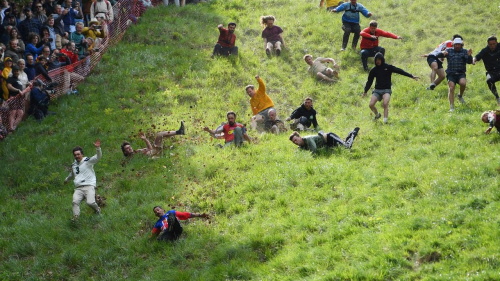
Moreover, cheese rolling benefits from what might be described as “authentic spectacle.” Unlike staged or scripted entertainment, the outcomes are genuine and unscripted. This authenticity resonates with audiences who increasingly seek real experiences in a media landscape often dominated by artificiality. The raw, unfiltered nature of the event enhances its credibility and emotional impact.
Social dynamics also play a role in sustaining interest. Attending or even watching cheese rolling can serve as a shared experience, fostering a sense of community among spectators. The collective reactions—cheers, gasps, and laughter—contribute to a communal atmosphere that amplifies individual enjoyment. In this sense, the event functions not only as a competition but also as a social ritual that brings people together.
Adapting Tradition in a Modern Sporting Landscape
Despite its enduring popularity, competitive cheese rolling faces ongoing challenges related to safety, organization, and sustainability. Authorities have periodically attempted to regulate or even cancel the event due to concerns over participant welfare and crowd control. However, such efforts often encounter resistance from both local communities and enthusiasts who view the tradition as an integral part of cultural heritage.
In response, informal adaptations have emerged. Organizers and participants have implemented measures aimed at mitigating risk while preserving the event’s essence. These include improved medical support on-site, better crowd management strategies, and increased awareness of safety considerations among competitors. While these measures do not eliminate danger, they represent a pragmatic approach to balancing tradition with modern expectations.
The role of digital media continues to shape the evolution of cheese rolling. Livestreams, social media updates, and online communities have expanded the event’s reach, allowing global audiences to engage with it in real time. This digital presence not only enhances visibility but also creates new opportunities for storytelling, as participants share their experiences and perspectives with a broader audience.
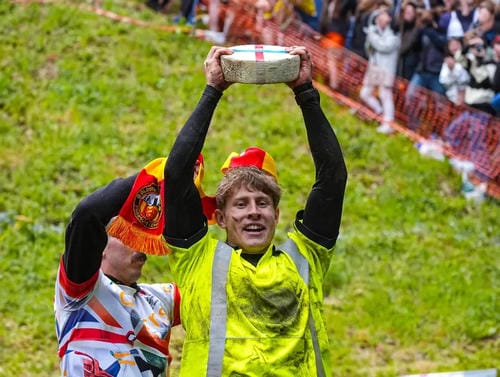
Commercialization, however, remains a delicate issue. While increased attention can bring economic benefits to local communities through tourism and sponsorships, there is a risk that excessive commercialization could undermine the event’s authenticity. Maintaining a balance between growth and preservation is therefore crucial to ensuring its long-term viability.
Another notable development is the diversification of participants. What was once a predominantly local affair now attracts individuals from various countries, each bringing their own motivations and interpretations of the event. This internationalization enriches the competition, introducing new dynamics and perspectives while reinforcing its status as a global curiosity.
At the same time, the core elements that define cheese rolling remain unchanged. The steep hill, the rolling cheese, and the fearless participants continue to form the foundation of the spectacle. This continuity is essential, as it anchors the event in its historical roots even as it adapts to contemporary contexts.
The enduring appeal of competitive cheese rolling ultimately lies in its ability to bridge past and present. It embodies a form of sport that is both archaic and timeless, resisting the homogenization that characterizes much of modern athletics. By preserving its unique identity while embracing selective innovation, cheese rolling continues to captivate audiences and participants alike, ensuring that the chase down the hill remains as thrilling as ever.
About the Author:
Elliot Mercer is a freelance sports journalist and cultural analyst specializing in unconventional and heritage sporting events. With over a decade of experience contributing to regional publications and international sports magazines, Mercer has built a reputation for in-depth storytelling that bridges athletic performance with cultural context. Holding a degree in Sports Sociology and having conducted field research on traditional competitions across Europe, his work focuses on the intersection of risk, community, and spectacle in modern sport.
References:
[1] Smith, J. (2021). Traditional rural sports and their cultural significance. Journal of Cultural Heritage Studies, 14(2), 112–128.
[2] Brown, L., & Carter, P. (2020). Risk-taking behavior in extreme recreational activities. Psychology of Sport and Exercise, 45, 101–115.
[3] Williams, R. (2019). Media amplification of niche sporting events in the digital age. International Journal of Sports Communication, 12(3), 233–247.
[4] Thompson, E. (2022). Community identity and local festivals: A sociological perspective. Sociology of Sport Journal, 39(1), 55–70.
[5] Green, D. (2018). The evolution of informal sports in modern society. Sport इतिहास Review, 27(4), 89–104.
Recommend for you:

How Virtual Reality Is Revolutionizing Athletic Training?
Athletic training has always been defined by the relentless pursuit of marginal gains—small improvements in performance that can make the difference between victory and defeat.
Why Curling Is Now a Truly Global Winter Sport?
For most of its long history, curling was seen as a sport of specific regions — a game of strategy played on ice in countries with cold climates, a traditional pastime in Scotland and a cultural cornerstone in Canada.
Competitive Rock Skipping Becomes a Global Sporting Phenomenon
In the world of sports, some disciplines soar with high-speed action, dramatic finishes, and global recognition, while others quietly carve out their niche, captivating a passionate yet devoted audience.
Speed Climbing Continues to Redefine Athleticism and Captivate Audiences on the Olympic Stage
Speed climbing, a discipline of sport climbing, has captured the imagination of athletes and spectators alike due to its explosive combination of power, precision, and strategy.