Why Automated Ball-Strike Technology Is Becoming the Most Debated Issue in International Baseball?
Baseball is often called the thinking man’s game, a sport that prizes nuance, strategy, and tradition. For centuries, the strike zone — that invisible vertical expanse over home plate that determines whether a pitch is “ball” or “strike” — has been adjudicated by human umpires. Their calls, influenced by eyesight, experience, judgment, and — yes — occasional error, have shaped countless innings, games, and seasons. However, the introduction and rapid evolution of automated ball-strike technology (often called ABS or “robot umpires”) is transforming one of the most fundamental aspects of the sport. Far from being a quiet technical upgrade, this shift has ignited passionate debate across the baseball world — from Little League diamonds to international professional competitions.
The conversation about automated ball-strike technology isn’t limited to the U.S. Major Leagues; it has global implications. Baseball is now a sport with a truly international footprint, played and followed in Asia, Latin America, Europe, and beyond. Every league has its own culture, traditions, and views on how the game should be officiated. As different organizations experiment with or resist technology, fans, players, coaches, and officials find themselves divided — not just about whether ABS should be used, but how it should be implemented, what it should replace, and how it will redefine the human element of baseball.
What Automated Ball-Strike Technology Is and How It Works
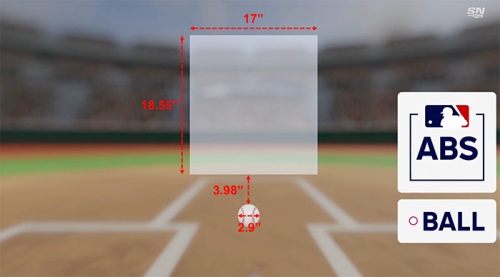
The automated ball-strike system, at its core, uses sophisticated camera arrays and real-time tracking technology to determine whether a pitch passes through a defined strike zone. In systems like the one adopted by Major League Baseball for the 2026 season, cameras such as Hawk-Eye track the ball’s trajectory with millimeter precision, and a computer algorithm compares that to a strike zone defined by the rule book and the batter’s height. Instead of relying solely on an umpire’s eyesight and judgment, the system outputs a definitive “ball” or “strike” call that can be displayed to teams and broadcasters within seconds. In MLB’s hybrid version, human umpires make the initial call but players can challenge it — typically by tapping their helmet or cap — and the automated system’s decision then supersedes the original call. This unique challenge model reflects a compromise between traditional officiating and full automation, attempting to preserve the umpire’s role while reducing the number of disputed calls on borderline pitches.
Before this technology reached the major leagues, it was trialed extensively in the minor leagues and independent leagues. The independent Atlantic League first used an automated ball-strike system as far back as 2019. Triple-A, the highest level of the minor leagues, used ABS extensively in 2022 and 2023, both with and without a challenge system. These tests revealed some of the first real consequences of technological ball-strike adjudication — changes in walk and strikeout rates, differences in how breaking balls were treated by the system versus human umpires, and early insights into how players adapted their approach when they could trust that borderline calls would be more consistent.
Despite promising results in accuracy and consistency, ABS technology is far from perfect, and some of the controversy stems from how its core strike zone definition differs from traditional umpire interpretation. For example, automated systems often define a strike based on where the ball crosses the midpoint of the plate, whereas human umpires, guided by decades of experience, tend to call a more fluid zone that accounts for context, batter stance, and even pitch movement as perceived through human judgment. The coded strike zone — rectangular and consistent — contrasts with the historical umpire zone, which is perceived as oval or slightly variable, “called” as much by feel as by rule. When a baseball machine adheres strictly to geometric measurements, it can call pitches strikes or balls in ways that feel logical according to the rule book but unnatural to players and fans used to the barn-storming human zone.
Global Perspectives: ABS in International Baseball
Internationally, this debate takes on even more complexity. Unlike MLB, some international competitions and leagues have declined to adopt automated systems, choosing instead to preserve traditional umpiring. For instance, in the 2026 World Baseball Classic — the premier global baseball tournament featuring teams from around the world — ABS was not in use. This decision led to high-profile controversy when a human umpire’s strike zone was widely criticized, especially in games where incorrect calls seemed to change the momentum or outcome of crucial matchups. The absence of a universally accepted automated system spotlighted the inconsistency between leagues that adopt ABS and those that do not, raising questions about fairness, competitive integrity, and the direction of the sport on a global stage.
Proponents of technology in baseball offer a compelling case. They emphasize confidence in data, objectivity, and the reduction of human error — especially in light of how much time, money, and emotion is invested in every game at every level. Advocates argue that ABS systems make calls more accurate, transparent, and reproducible, which should theoretically increase fairness. They also point out that high-stakes controversies — game-changing pitches called incorrectly — have long frustrated players, managers, and fans alike. For these proponents, the automation of ball-strike calls is not about diminishing human umpires but about enhancing their ability to officiate fairly by giving them a precise standard to reference.
Critics of these automated systems, however, present equally passionate arguments rooted in baseball culture, strategy, and tradition. Many assert that part of baseball’s beauty lies in its imperfections. Human umpires — with their idiosyncrasies, tendencies, and subjective judgments — have been part of the sport since its earliest days. To some players and fans, removing that human element feels like eroding the game’s soul. They argue that baseball has always accommodated a degree of variability, and that the chase of a borderline pitch — the pitcher’s strategy to get a call, the catcher’s framing to influence perception — is part of the sport’s intricate dance. Automated systems, by removing that variability, risk sterilizing one of baseball’s most subtle strategic layers.
Another line of critique centers on the technology’s own limitations. While systems like Hawk-Eye are advanced, they’re still subject to calibration challenges, environmental factors, and mechanical imperfections. Some critics note that tracking systems, while highly consistent, don’t perfectly capture the experience of a pitch — that moment when a breaking ball just barely touches the zone in a way that human umpires can interpret through context. Opponents worry that relying too heavily on technology will replace judgment with rigidity, potentially leading to new kinds of controversy, frustration, and strategic distortion — especially in leagues or tournaments where hybrid implementations differ.
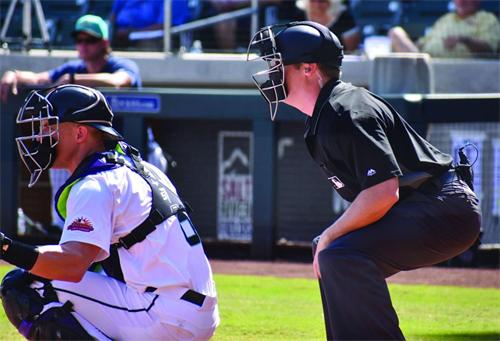
Moreover, the existence of differing implementations — such as full automation in one league and a challenge system in another — has produced inconsistency that can confound players. A pitcher might face a different definition of the strike zone depending on where he plays. Teams have learned to adapt to human variability over decades; now they must adapt to technological variability. This duality — two strike zones, two officiating paradigms — has created a kind of regulatory fragmentation that some worry will undermine the integrity of play across different contexts.
At the heart of the debate is a philosophical divide about what baseball is. Is it a sport governed by human narrative, filled with personality, judgment calls, and debate? Or is it a game that should be continually refined, optimized, and engineered for maximum fairness and objectivity? Fans and professionals alike fall across a spectrum of positions, with many acknowledging the practical benefits of technology but lamenting the loss of baseball’s messy human charm.
This ongoing conversation — intense, passionate, and multifaceted — ensures that automated ball-strike technology will remain one of the most talked-about issues in international baseball for years to come. As leagues refine their approaches and fans watch how this technology performs at the highest levels, the ultimate shape of the strike zone — and the soul of the sport — continues to evolve before our eyes.
About the Author:
Maxwell Delaney is a veteran sports journalist and baseball strategist with more than fifteen years of experience reporting on professional and international baseball. A graduate of the University of North Carolina’s Sports Journalism program, Max has covered Major League Baseball, the World Baseball Classic, and top winter leagues in Asia and Latin America. His work blends technical analysis with cultural insight, offering readers both the how and the why behind transformative changes in the sport. Max’s writing has appeared in Baseball Analytics Today, Global Ballparks Magazine, and World Sports Insights, where he regularly explores the intersection of technology, strategy, and tradition in baseball.
References:
[1] Axios. (2026, March 9). MLB’s ABS challenge system, explained.
[2] Associated Press. (2025, September 23). Robot umpires are coming to MLB. Here’s how they work.
[3] The Telegraph. (2025, September 23). MLB automated strike-zone challenges approved for 2026.
[4] Trendify Daily. (2025, May). The debate around the automated balls and strikes (ABS) system in baseball.
Recommend for you:

Competitive Cheese Rolling Remains One of the Most Thrilling Traditional Sporting Spectacles
Every year, on a steep hillside in Gloucestershire, England, participants gather for an event that seems almost absurd at first glance: they chase a wheel of cheese down a dangerously sharp slope.
Global Rivalries and Olympic Dreams Shape the 2026 World Baseball Classic
The return of the World Baseball Classic in 2026 reaffirmed the tournament’s role as the premier international competition in the sport.
Triumph on Ice and Snow: Highlights from the 2026 Winter Paralympics
The 2026 Winter Paralympics in Milan and Cortina d’Ampezzo offered an unforgettable display of skill, resilience, and determination, cementing the Games’ status as a premier global sporting event.
Record-Breaking Momentum Shapes the Early 2026 Athletics Season
The early months of the 2026 athletics calendar have already delivered a series of performances that hint at a remarkable year ahead for track and field.